

YOUR BODY HAS BEEN PART OF THE
CONVERSATION ALL ALONG.
The Flow Space Method is a practice of learning how to listen.
Through movement, somatic awareness, sensuality, creativity, and expression, we explore what happens when you stop experiencing yourself only through thought and begin including the body in the way you know yourself.
This isn't about becoming better at embodiment.
It's about becoming more available to you.
01 / EMBODIMENT
WHAT DOES IT MEAN TO BE EMBODIED?
You can know something intellectually and still struggle to live it.
You can know you deserve to take up space and still make yourself smaller.
Know you need rest and still push.
Know your boundaries and still abandon them.
Know you're creative and still be terrified to express yourself.
Know what you want and still hesitate to choose it.
Embodiment is where knowing becomes something you can feel, practice, and eventually live.
It is the practice of being present enough with yourself to notice sensation, emotion, impulse, desire, resistance, breath, movement, and choice.
Not because every sensation contains an answer.
But because your body is part of your experience.
And we've spent enough time leaving it out of the conversation.

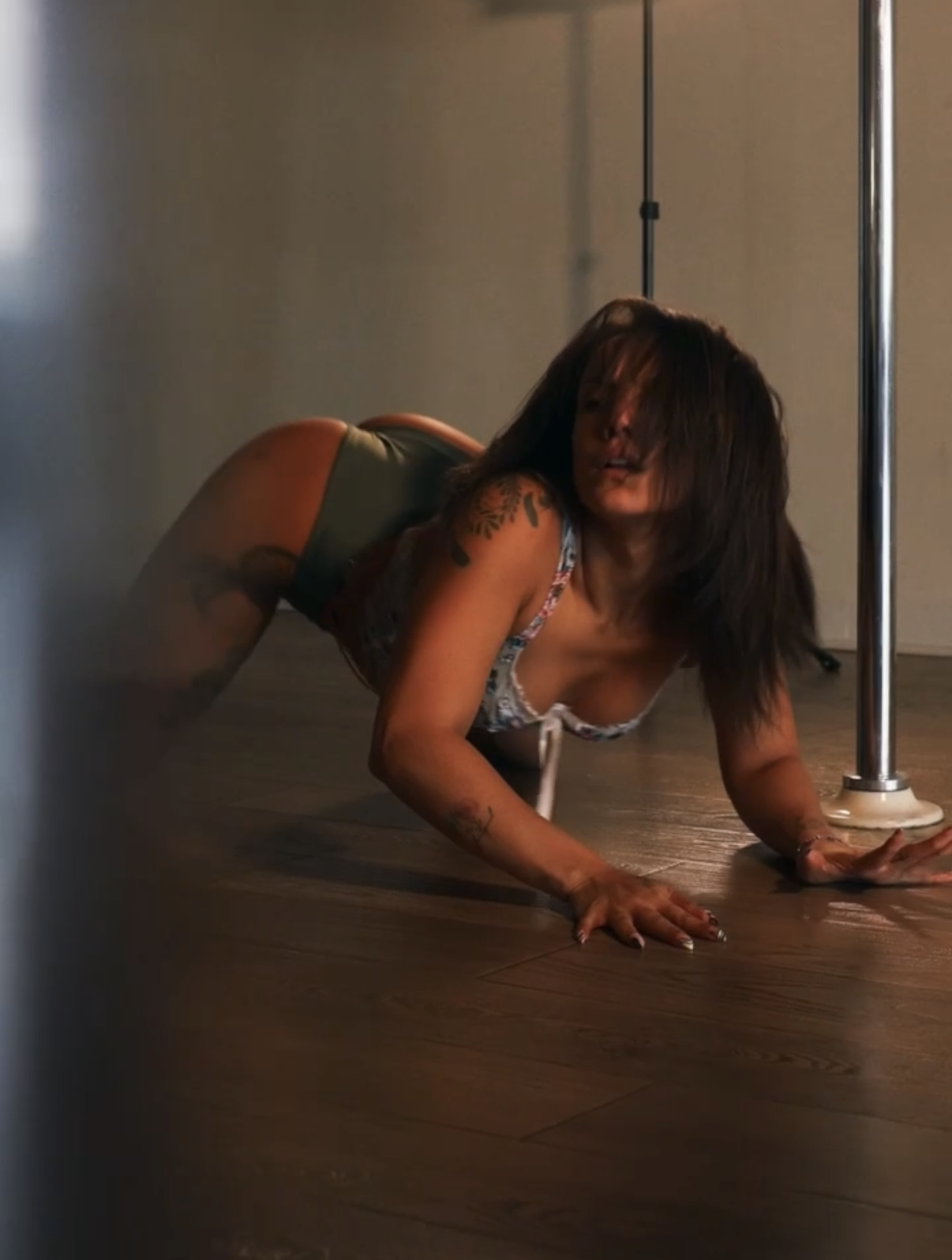
02 / WHY THE BODY?
BECAUSE YOU ARE MORE THAN A THINKING MIND.
So much of our lives happens from the neck up.
We analyze, explain, plan, judge, rehearse- try to understand ourselves.
There is value in understanding.
But there are parts of ourselves we don't discover through analysis alone.
Movement gives us another language.
It lets us notice:
Where do I hesitate? Where do I rush? Where do I hold my breath? What feels natural? What feels uncomfortable? What happens when I'm seen? Can I take up more space? Can I soften without disappearing? Can I follow an impulse without knowing where it leads?
The way you move isn't a diagnosis of who you are.
It's somewhere to get curious.
03 / SOMATICS
SOMATICS IS THE PRACTICE OF EXPERIENCING YOURSELF FROM WITHIN.
Rather than focusing only on what your body looks like from the outside, somatic practice turns attention toward what you are experiencing internally.
Breath.,sensation, tension, temperature, weight, impulse, emotion, comfort, discomfort.
The subtle changes happening moment to moment.
At Flow Space, somatic awareness is woven into movement so you can practice noticing yourself without immediately needing to judge, fix, or perform what you find.
Sometimes the work is movement, sometimes it's stillness, sometimes it's realizing you don't actually know what you feel yet.
Noticing is still a beginning.
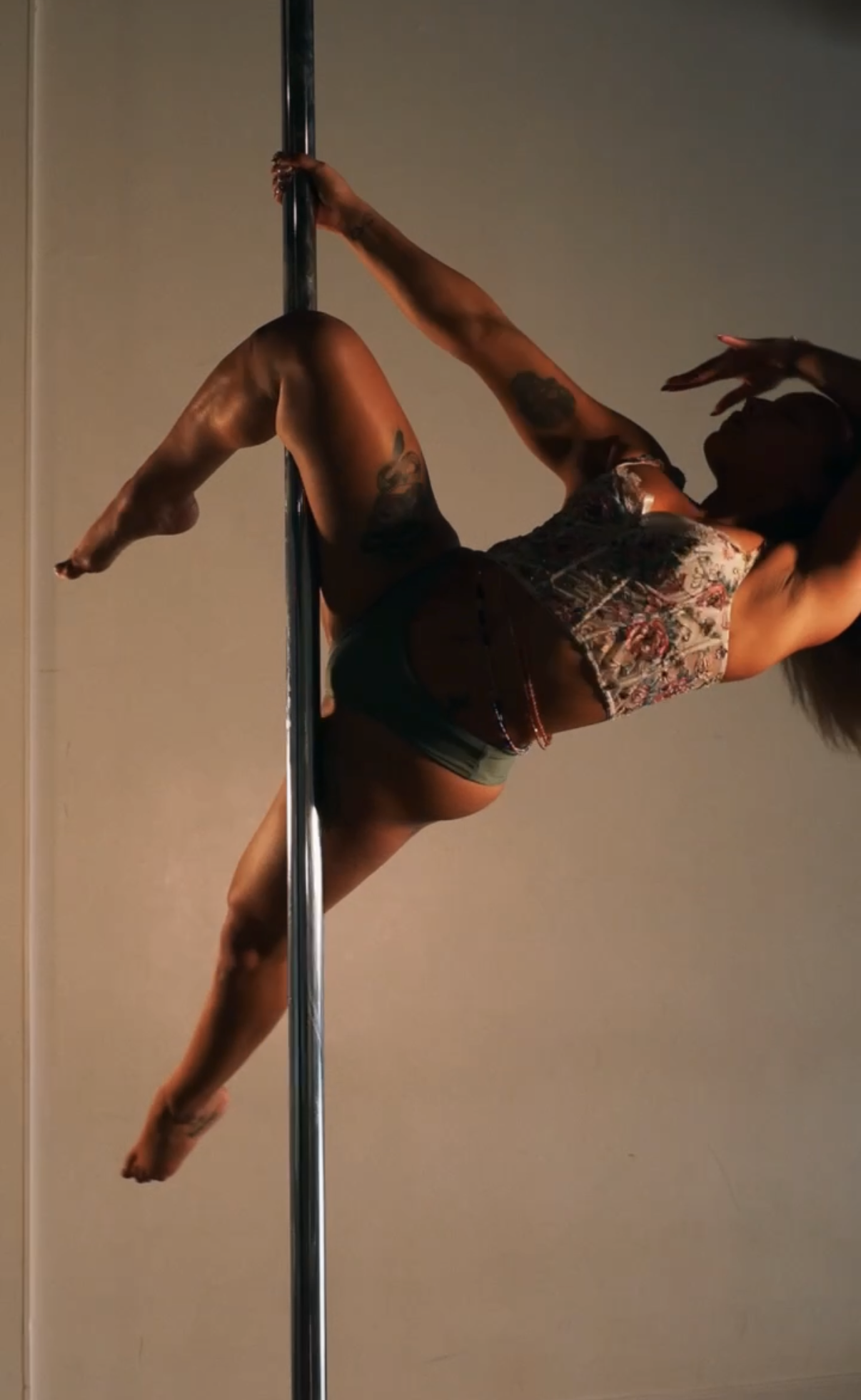

04 / SENSUALITY
SENSUALITY IS NOT A PERFORMANCE HERE.
Sensuality is often presented as something we perform outwardly.
How attractive we look.
How desirable we appear.
How well we can embody someone else's idea of sexy.
Flow Space brings sensuality back to its simplest origin:
the senses.
What feels good? What feels interesting? What do you notice?
What happens when you let yourself enjoy an experience without needing to turn that enjoyment into something for someone else?
Sensual movement becomes a practice of attention.
Texture. Breath. Rhythm. Touch. Pleasure. Curiosity.
Your sensuality doesn't need an audience.
It belongs to you first.
05 / EXPRESSION
WHAT YOU FEEL NEEDS SOMEWHERE TO GO.
Embodiment isn't only about turning inward.
Eventually, something asks to move out.
A gesture. A sound. A boundary. A creation. A choice. A dance. A truth.
Expression is how the internal becomes visible.
And this is why creativity belongs inside the Flow Space Method.
We're not trying to create something impressive.
We're practicing the courage to let something that is ours exist outside of us.

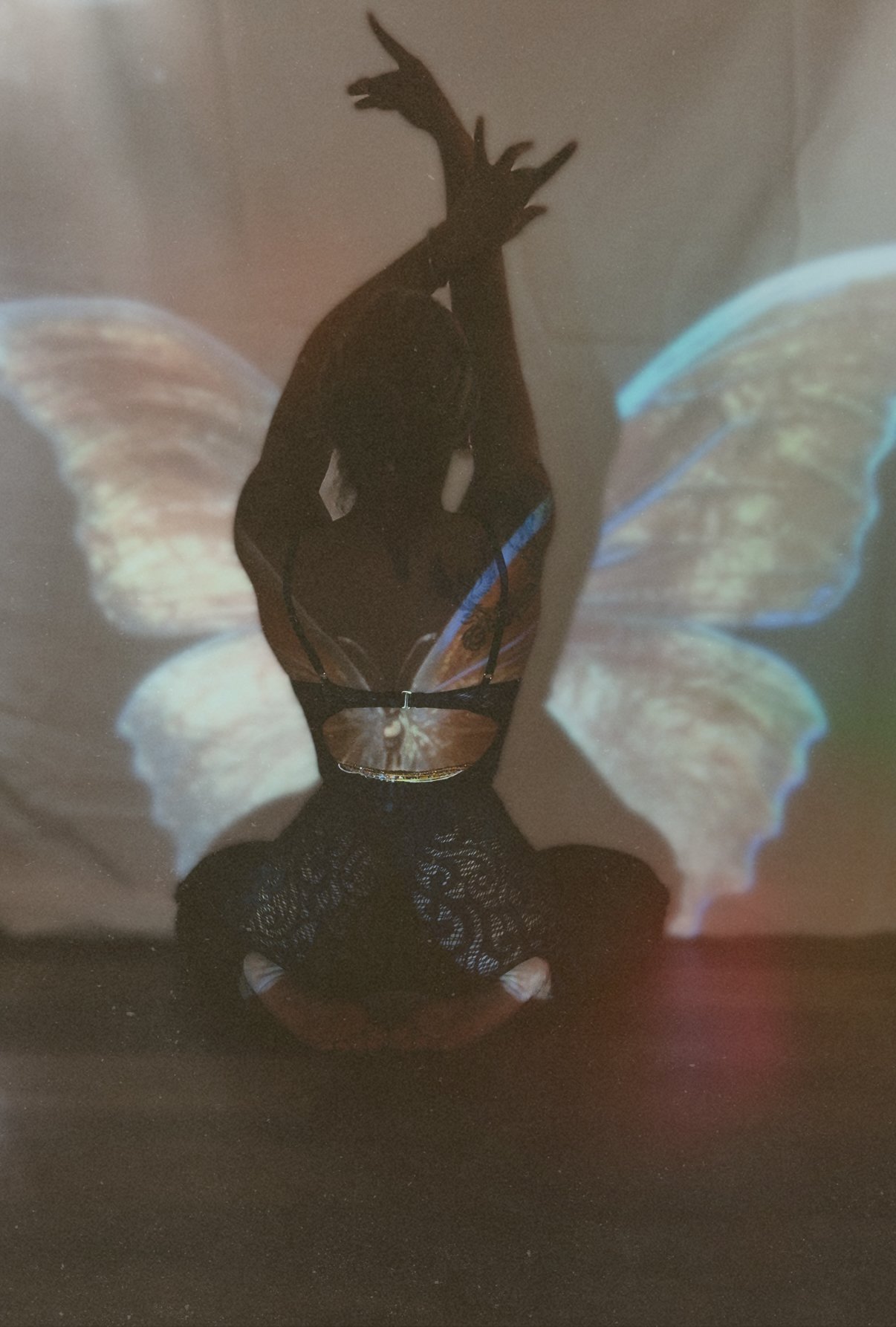
BREATHE. FEEL. FLOW. EMBODY.
These aren't four levels you graduate through.
They're movements we return to again and again.
06 / THE METHOD
01 / BREATHE
ARRIVE.
Breath creates a pause between everything happening around you and what is happening within you.
We slow down enough to notice.
To orient.
To arrive.
To become present to what is actually here.
02 / FEEL
LISTEN.
Turn toward sensation, emotion, desire, resistance, curiosity, pleasure, discomfort, and impulse.
We don't immediately ask:
How do I change this?
We begin with:
What am I experiencing?
03 / FLOW
EXPLORE.
Now we move.
Without needing the movement to be beautiful. Without needing to know where it's going. Without needing to get it right.
Movement becomes experimentation.
What happens if I follow this? What happens if I take more space? What happens if I slow down? What happens if I choose differently?
Flow is where curiosity becomes experience.
04 / EMBODY
LIVE.
The practice doesn't end when the movement does.
What did you notice? What did you discover? What wants to change? What do you want to carry with you?
Embodiment is the integration.
The boundary you actually communicate. The rest you allow yourself. The thing you create. The desire you admit. The choice you make. The way you walk into a room. The way you speak. The way you let yourself be seen.
The practice becomes part of the person living your life.
07 / AUTHORSHIP
THE GOAL ISN'T TO BECOME MORE LIKE ANYONE ELSE.
Flow Space isn't interested in handing you another blueprint for the woman you should become:
More confident, feminine, sensual, productive. healed.
More anything.
We're interested in helping you develop enough relationship with yourself that you can decide what your more actually is.
That is authorship.
Not complete control over your life, not reinventing yourself every six months, not constructing the perfect identity.
Authorship is the willingness to participate consciously in the way you live.
To notice what has been inherited, expected, performed, or automatically repeated, to ask what still belongs, to explore what doesn't.
And to give yourself permission to choose again.
You are both the person being discovered and the person doing the discovering.
08 / WHAT THIS CAN LOOK LIKE
THERE IS NO SINGLE WAY TO PRACTICE EMBODIMENT.
The method isn't tied to one type of movement, one practice, or one way of expressing yourself.Inside Flow Space, we explore embodiment through four interconnected spaces: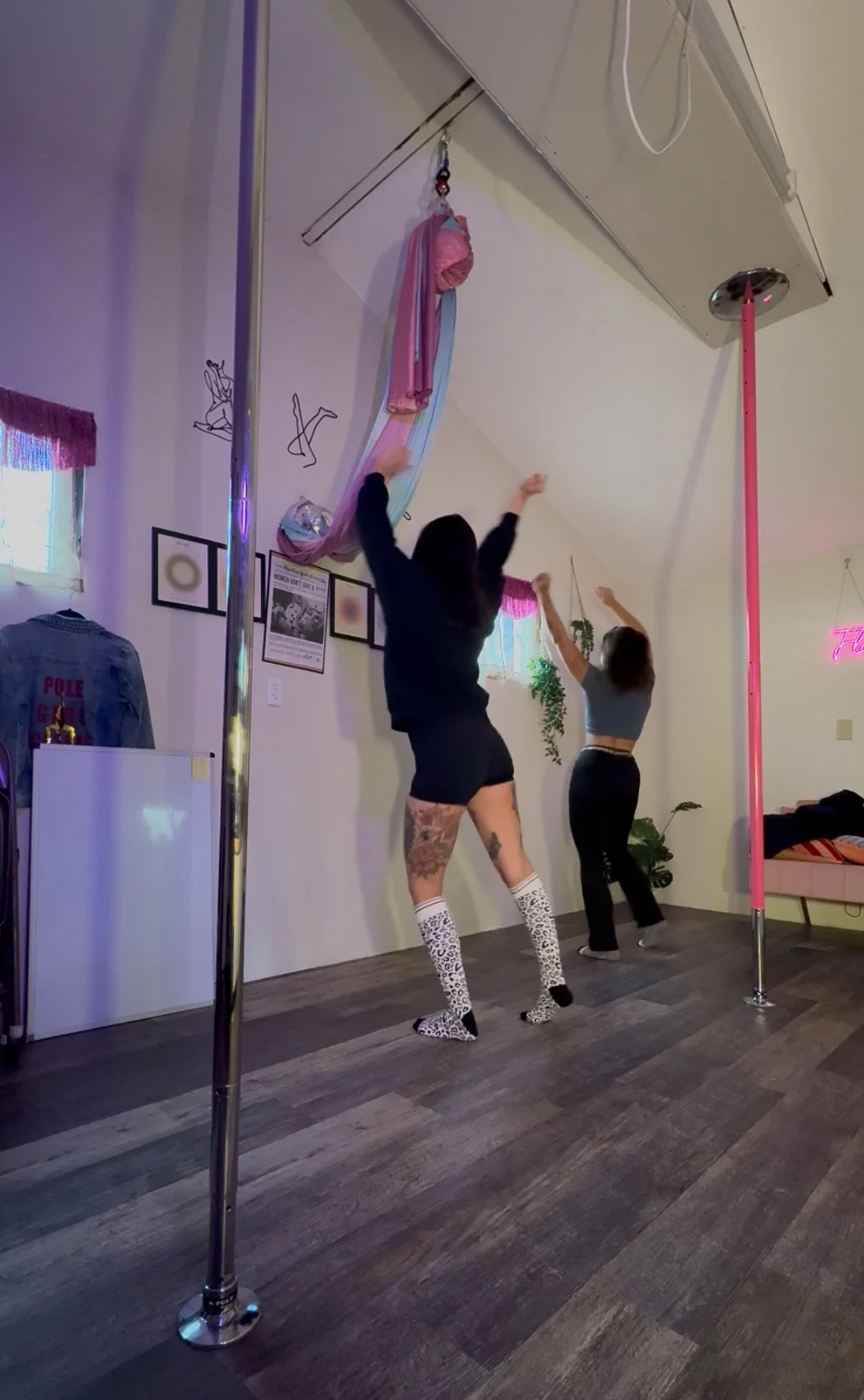
MOVEMENT
THE BODY BECOMES A PLACE TO EXPLORE.Movement gives us somewhere to practice what we're discovering in real time.
We slow down. Follow impulses. Take up space. Experiment with rhythm, breath, stillness, touch, pole, dance, yoga, and intuitive movement.
Not to perfect the movement, but to notice ourselves inside of it.
Movement becomes a language.

SENSUALITY
THE SENSES BRING US BACK TO THE PRESENT.Sensuality invites us into texture, pleasure, rhythm, touch, curiosity, desire, and the experience of simply feeling.
Here, sensuality isn't something you perform for an audience.
It's an opportunity to become more intimate with your own experience and explore what feels alive, interesting, pleasurable, or true to you.
Your sensuality belongs to you first.
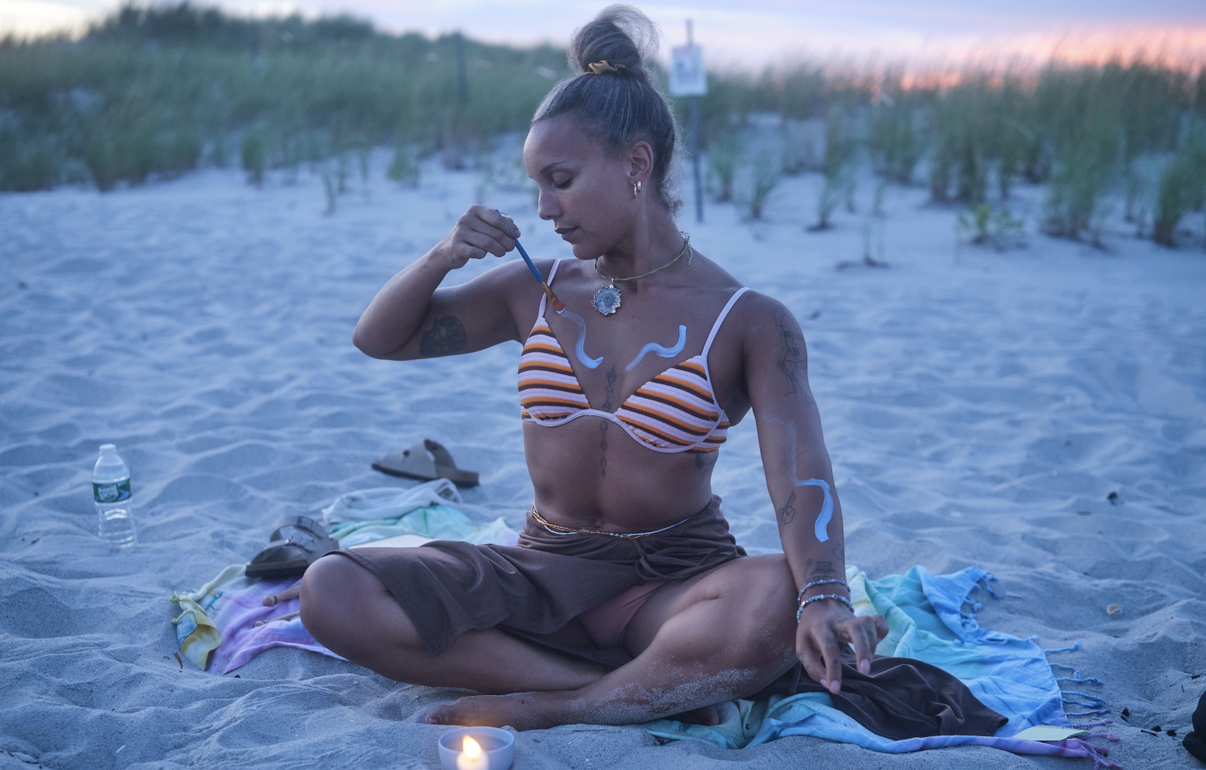
Creativity gives form to what we're discovering.
Sometimes that's dance. Sometimes writing, painting, sound, ritual, storytelling, play, or creating something that didn't exist before you made it.
The goal isn't to make something good.
It's to practice allowing something that is yours to exist outside of you.
Expression becomes an act of authorship.
WHAT'S INSIDE OF YOU GETS SOMEWHERE TO GO.CREATIVITY
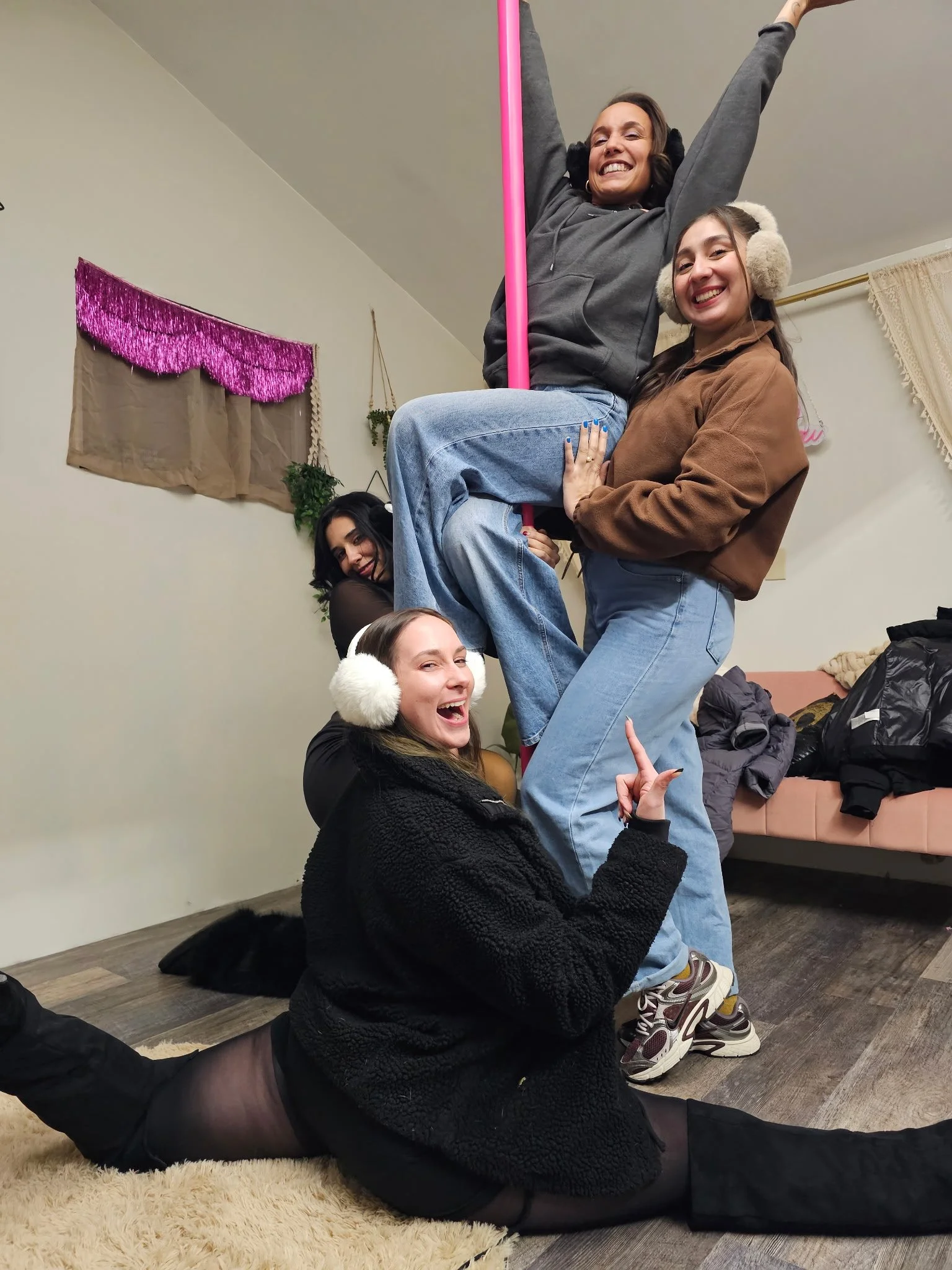
Embodiment doesn't only happen alone.
Community gives us somewhere to explore connection, visibility, vulnerability, boundaries, belonging, and what it feels like to take up space alongside other people doing the same.
Not comparison, not performance, not becoming the same.
Being fully yourself doesn't have to mean being by yourself.
WE PRACTICE BEING OURSELVES WHILE BEING WITNESSED.COMMUNITY
WHAT FLOW SPACE IS NOT:YOU DON'T NEED TO PERFORM YOUR HEALING HERE.
Flow Space is not therapy, medical treatment, or a replacement for professional mental-health or healthcare support.
It is not a place where every movement is analyzed or every sensation is assigned a hidden meaning.
It is not about forcing emotional release.
It is not about pushing past your boundaries in the name of growth.
And it is not another system for becoming the "best version" of yourself.
This is a practice of curiosity, agency, consent, expression, and relationship with self.
Sometimes it will feel profound, sometimes playful, sometimes uncomfortable, sometimes beautifully ordinary.
All of it belongs.
YOU DON'T HAVE TO UNDERSTAND YOURSELF COMPLETELY TO BEGIN.
That's actually kind of the point.
You can arrive curious, disconnected, restless, creative, nervous, sensual, awkward, certain, completely uncertain.
You don't need to know what you're looking for before you enter.
Start with what you can feel.
And we'll explore from there.